

CU CORRESPONDENT
Integrating the youth into state-building must transcend active politics to encompass governance, technology, and social leadership, speakers urged at a Chittagong University (CU) seminar today.
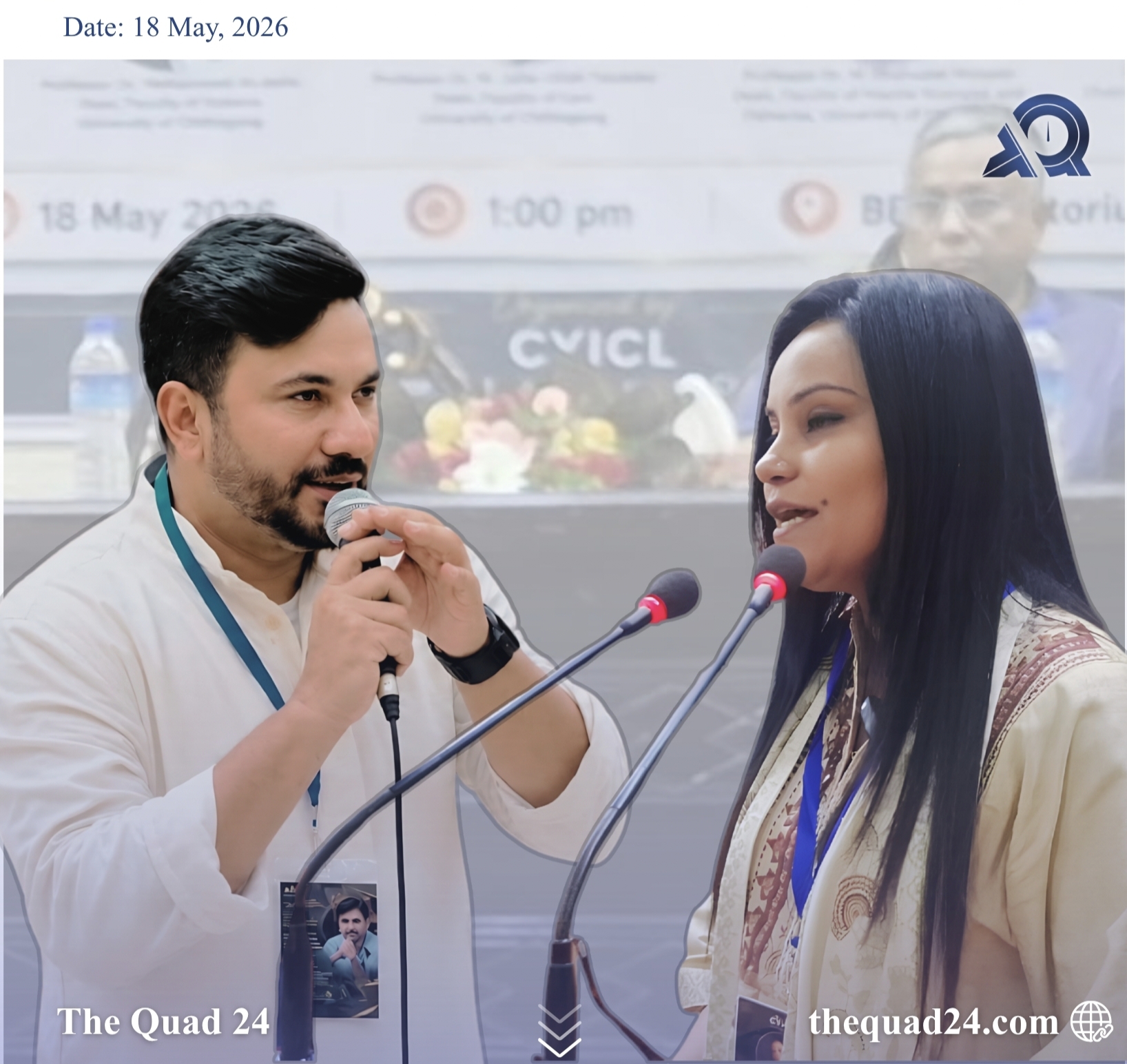
The call for broader youth inclusion was made during a seminar titled “Youth Pulse in Politics: Voices, Opinions, and Future Thoughts,” organized by the Center for Youth Intellectual and Civic Learning at the Faculty of Business Administration Auditorium. Keynote speaker Israfil Khosru, a member of the BNP Foreign Affairs Committee, joined prominent academic experts to demand systemic university reforms, an end to rising mob culture, and the establishment of an inclusive democratic ecosystem.
Highlighting demographic realities, Israfil Khosru noted that citizens aged between 15 and 29 account for nearly 30 percent of the national population, making it impossible for the state to progress by leaving this massive ecosystem behind. He raised concerns regarding the low turnout of women at the event, asserting that future campus representations must aim for at least 50 percent to accurately mirror the country’s demographics. Addressing the shift in geopolitical movements, including Bangladesh’s recent August uprising, Khosru pointed out that modern digital landscapes have permanently broken one-way state propaganda. He added that today’s tech-savvy youth actively fact-check information and counter manipulation, meaning policymakers can no longer command blind faith but must actively engage and motivate them across all development sectors.
Joining the panel, Professor Nahrin Islam Khan from Jahangirnagar University’s Department of Geography and Environment stressed the critical need for “proportionality and restraint” within student movements. While recognizing classroom and syndicate protests as signs of democratic health, she warned against the rising trend of unruly “mob culture” and selective accountability seen in recent years. Professor Khan urged the student body to build a campus culture that strictly stands against ragging and biased grading systems. She further called upon the current government to ensure absolute transparency in academic appointments, demanding that the recruitment of university teachers, Vice-Chancellors, and Pro-Vice-Chancellors prioritize merit, skill, and public acceptability over partisan political affiliations.
The seminar concluded with a consensus among speakers that a robust, multi-faceted ecosystem is essential to effectively channel the potential of the youth. Moderated by co-organizer Abrar Galib, the event also featured insights from Dhaka University Japanese Studies Professor Abdullah Al Mamun and CU Marine Sciences Professor Mohammad Zahedur Rahman Chowdhury. A distinguished academic delegation attended the session, including Science Faculty Dean Professor Mohammad Al-Amin, Law Faculty Dean Professor M. Jafar Ullah Talukdar, Marine Sciences & Fisheries Dean Professor M. Shahadat Hossain, and Management Department Chairman Professor Jahurul Alam, all echoing the organizers’ call for a participatory political culture.