

Correspondent, Chittagong University
Over 200 faculty members participate in session to modernize academic standards for 2025-26 session
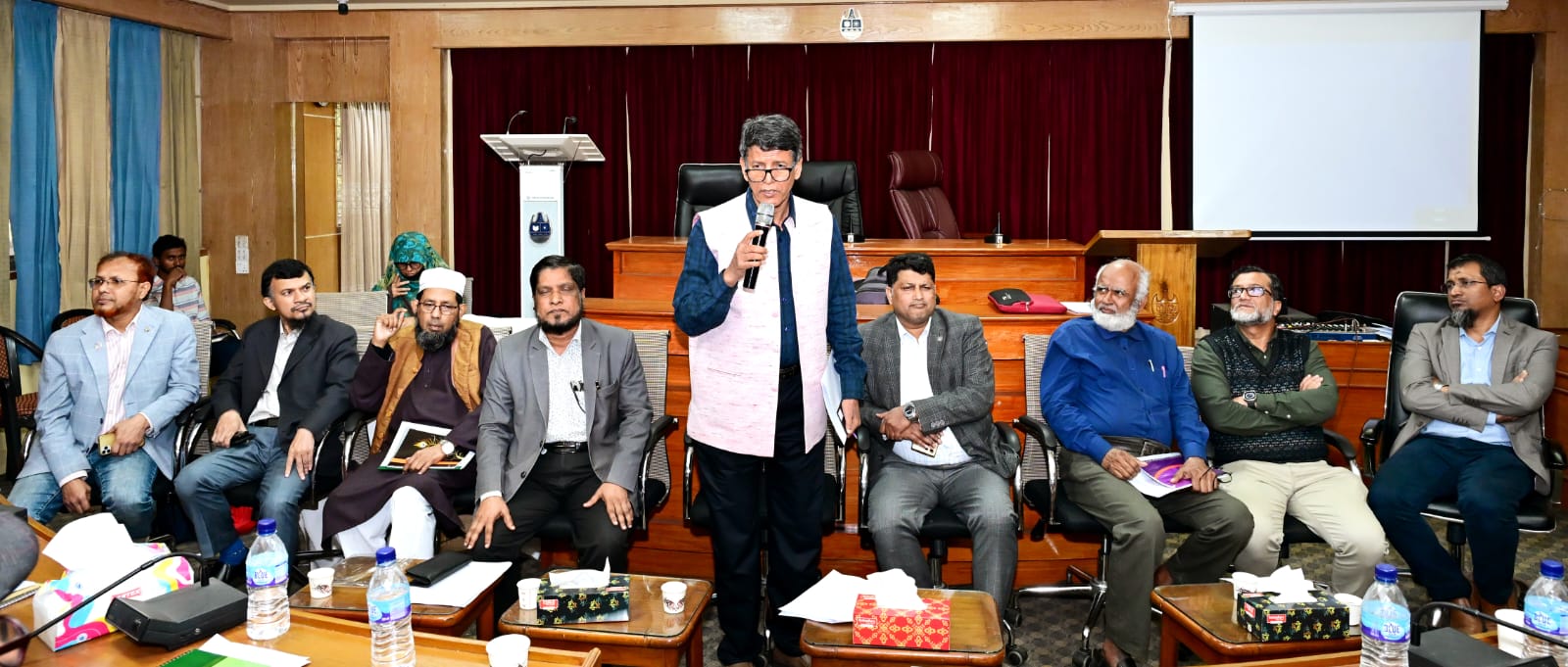
Chittagong University held a special workshop on Thursday (January 29, 2026) from 1:00 PM to 4:00 PM at the Vice-Chancellor’s conference room to implement a uniform semester system and Outcome-Based Education (OBE) curriculum aligned with the Bangladesh National Qualifications Framework (BNQF).
The workshop was organized by the Pro-Vice-Chancellor (Academic) office in collaboration with the Institutional Quality Assurance Cell (IQAC), following decisions from the 249th Academic Council meeting and 565th Syndicate meeting. The initiative aims to elevate the university’s education and research standards to international levels, as directed by the University Grants Commission (UGC) and Bangladesh Accreditation Council (BAC).
Key topics included credit revision according to BNQF, formulation of a uniform semester calendar, and modern OBE-based curriculum design.
Vice-Chancellor Professor Dr. Muhammad Yeahia Akhtar, Pro-Vice-Chancellor (Academic) Professor Dr. Mohammad Shamim Uddin Khan, and Pro-Vice-Chancellor (Administration) Professor Dr. Md. Kamal Uddin attended the workshop.
Over 200 faculty members participated, including deans of various faculties, chairpersons and directors of departments and institutes, Program Self-Assessment (PSA) committee members, and teachers closely involved in curriculum revision. Each department and institute was represented by three faculty members.
The technical sessions were conducted by IQAC Director Professor Dr. Mohammad Mosharrof Hossain, Additional Director Professor Dr. Shahadat Hossain, and Professor Dr. Mohammad Moslem Uddin.
Transforming Education for Global Standards
The workshop emphasized that the BNQF and OBE curriculum implementation aims to transform higher education quality and align it with global standards. The primary goal is to make students employment-oriented and skilled in accordance with the modern world.
Instead of traditional education, the university will now follow an outcome-based education model where specific competencies students will acquire after completing courses are predetermined. This ensures students gain not just theoretical knowledge but practical, workplace-applicable education.
Under BNQF standards, students’ qualifications will receive international recognition, providing CU graduates special advantages for higher education or employment abroad. Key features include credit transfer systems and lifelong learning opportunities, allowing students to transfer credits between institutions nationally and maintain recognition of previous education and experience even after breaks in their studies through a modularized education system.
Assessment methods will also undergo significant changes, with emphasis on creative evaluation and skill assessment alongside traditional examinations.
Leadership Perspectives
Vice-Chancellor Professor Dr. Muhammad Yeahia Akhtar said: “Although the new curriculum may seem difficult, it is actually simple. Through this, students will become more focused on their studies. If they remain busy with academic pressure, students won’t have opportunities to waste time on other things.” He thanked everyone and called for collective effort.
Pro-Vice-Chancellor (Academic) Professor Dr. Mohammad Shamim Uddin Khan stated: “This workshop is extremely important for the university’s greater interests and ensuring international standards. It will serve as a milestone in achieving the new academic structure and accreditation goals for the 2025-26 session.” He advised departments to consult with their faculties while proceeding and assured cooperation when needed.
Pro-Vice-Chancellor (Administration) Professor Dr. Md. Kamal Uddin said: “The new curriculum is simpler than the existing one. Examination procedures, assessment, and result publication will be easier. Although adjustment may be initially challenging, it will be resolved. I urge faculty-wise syllabus formulation and completion of remaining plans.”
Officials expect that successful implementation of this reform will bring revolutionary change to the country’s higher education sector and make graduates suitable for the international labor market.